

How Does Wrinkle Relaxing Injections Work?
Wrinkle relaxing injections are among the most performed cosmetic treatments in the world, yet most patients who receive them have only a surface-level understanding of what is actually happening beneath their skin. Knowing the mechanism behind these treatments is not just interesting science. It helps you set realistic expectations, communicate more effectively with your provider, and appreciate why factors like dosage, placement, and timing matter as much as they do.
To understand how wrinkle relaxing injections work, it helps to first understand why wrinkles form in the way they do. Every time you make a facial expression, your brain sends an electrical signal down a nerve pathway toward a targeted muscle. At the end of that nerve pathway sits a junction between the nerve ending and the muscle fiber. Here, the nerve releases a chemical messenger called acetylcholine, which crosses the gap and binds to receptors on the muscle cell, triggering it to contract.
Over the course of a lifetime, your facial muscles perform this contraction cycle thousands of times per day. Every smile, frown, squint, and raised eyebrow folds the overlying skin in the same pattern repeatedly. In youth, when collagen and elastin are abundant and the skin is resilient, it bounces back after each fold with ease. As those proteins decline with age and cumulative sun exposure, the skin gradually loses its ability to fully recover. The repeated creasing begins to leave a permanent impression, and what started as a dynamic line that appeared only during expression becomes a static line visible even when the face is completely at rest.
How the Injections Interrupt the Process
Wrinkle relaxing injections work by targeting the nerve-to-muscle communication pathway at the point where acetylcholine is released. The active ingredient in these treatments is a purified protein derived from botulinum toxin type A, one of the most precisely studied neurotoxins in modern medicine. When injected into a specific muscle, this protein binds to structures called SNAP-25 proteins inside the nerve terminal. These proteins are responsible for enabling the tiny vesicles that carry acetylcholine to fuse with the nerve cell membrane and release their contents into the junction.
By cleaving and disabling SNAP-25, the neurotoxin effectively locks the release mechanism in place. The nerve continues to fire its electrical signals, but the chemical messenger can no longer cross to the muscle. The targeted muscle receives no instruction to contract and enters a state of temporary relaxation. The skin above it is no longer being repeatedly folded by that muscle’s movement, allowing existing lines to soften and preventing new ones from deepening.
This is not paralysis in the colloquial or alarming sense of the word. The effect is targeted to specific injection sites and affects only the immediately surrounding muscle groups. Adjacent muscles continue to function normally, which is what allows a well-executed treatment to preserve natural facial expression while softening the areas of concern.
Why Results Are Not Immediate
One of the most common points of confusion for first-time patients is why results do not appear right away. The neurotoxin does not produce visible changes the moment it is injected because the binding and disabling process at the cellular level takes time to complete. The protein must first enter the nerve terminals, locate and bind to the SNAP-25 proteins, and fully disrupt the vesicle release mechanism before the muscle begins to respond.
This process unfolds gradually over the days following treatment. Most patients begin to notice subtle changes in muscle movement within three to five days. The full effect, where the treated muscles are operating at their most reduced level of activity, typically becomes visible at the two-week mark. This is why reputable providers schedule follow-up appointments at two weeks rather than one, and why it is important not to judge your final results too early.
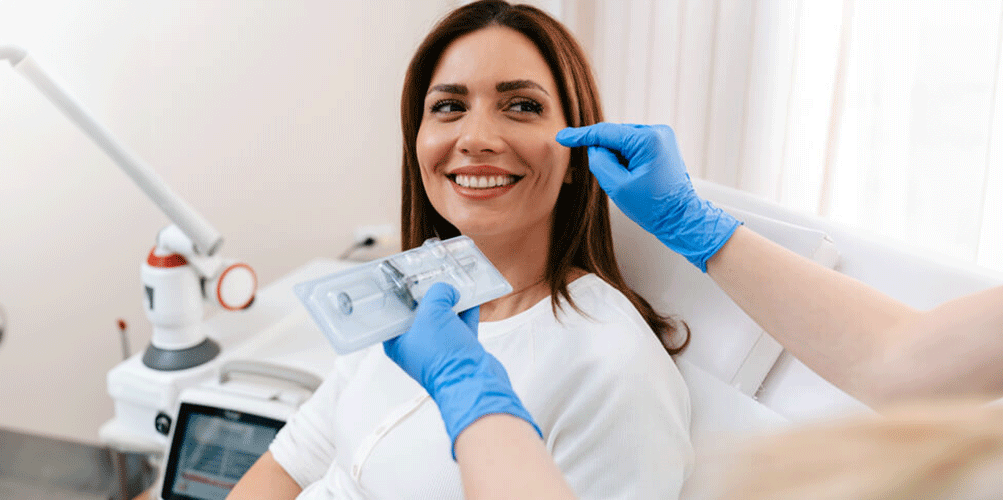
Botox, Dysport, and Xeomin: What Is the Difference
All three of the major FDA-approved wrinkle relaxing products use botulinum toxin type A as their active ingredient and work through the same fundamental mechanism. Their differences lie in their formulation and molecular characteristics, which affect how they behave once injected.
Botox, the original and most widely recognized brand, contains the toxin molecule surrounded by accessory proteins that stabilize it. It typically takes effect within four to seven days and has a well-established dosing profile built on decades of clinical use. Dysport features smaller protein molecules and a lighter formulation that allows it to diffuse somewhat more freely through tissue. This makes it particularly well-suited for treating larger surface areas like the forehead, and it often shows results within two to three days. Xeomin is formulated as a pure neurotoxin without accessory proteins, which reduces the theoretical risk of the body developing antibody resistance over time. It takes effect on a timeline similar to Botox and requires no refrigeration due to its stripped-down formulation.
An important point that surprises many patients is that units across these three products are not interchangeable. A unit of Botox is not equivalent to a unit of Dysport or Xeomin. Your injector will determine the appropriate dosing based on the specific product being used, the strength of the targeted muscles, and the degree of correction desired. This is one of many reasons why experience and anatomical knowledge are so critical in the person administering your treatment.
The Precision That Makes It Work
One of the defining qualities of wrinkle relaxing injections as a treatment modality is their capacity for precise, localized effect. A skilled injector does not simply inject the product into the general area of concern. They map out the specific muscle groups responsible for the unwanted movement, assess the depth and angle required to reach those muscles accurately, and deliver the product to exactly the right location in exactly the right amount.
This precision matters enormously. Too superficial and the product fails to reach the muscle effectively. Too deep and it may affect unintended structures. Too much product and the result looks overdone, with movement overly suppressed across a broader area than intended. Too little and the treatment underperforms. The injection map your provider creates for your face is a clinical document of their anatomical assessment, and no two maps are identical because no two faces are identical.
The muscles of the upper face, where wrinkle relaxing injections are most commonly applied, have complex interrelationships. The corrugators, procerus, frontalis, and orbicularis oculi muscles all contribute to the expressions that create lines in the forehead, between the brows, and around the eyes. How those muscles are balanced against each other in treatment determines whether results look natural and refreshed or asymmetrical and unnatural. An injector who understands these dynamics works with your anatomy rather than against it.
Why Results Are Temporary
The temporary nature of wrinkle relaxing injections is built into the biology of the treatment itself. The body does not accept a permanent disruption of nerve-to-muscle communication. Over time, the affected nerve terminals generate new SNAP-25 proteins, the vesicle release mechanism is gradually restored, and the muscle begins to regain its ability to receive acetylcholine signals and contract again.
This biological recovery process is what determines the duration of results. For most patients, this plays out over approximately three to four months, after which muscle activity progressively returns to its pre-treatment baseline. First-time patients sometimes find their results fade slightly faster, closer to two to three months, because their muscles are strong and well-conditioned and the recovery process is robust. Patients who maintain consistent treatment over time frequently find the opposite: that results last progressively longer with each session.
The reason for this extension is that repeatedly treated muscles undergo a gradual adaptive change. A muscle that has been periodically prevented from contracting fully over the course of a year or two loses some of its baseline strength and mass. It requires less product to achieve the same degree of relaxation, and the effects of each treatment last longer as a result. This is one of the strongest arguments for beginning treatments before deep static lines have fully formed and for maintaining a consistent schedule once you start.
The Preventive Value
The science behind wrinkle relaxing injections also supports their value as a preventative tool, a use that has grown significantly among patients in their 20s and 30s. When the muscle responsible for a particular line is kept in a consistently reduced state of activity, the repeated skin folding that creates permanent creases simply does not occur at the same rate. Lines that might have become deeply etched static wrinkles over the following decade remain faint or do not develop at all.
This preventative application does not require aggressive dosing or a dramatic reduction in expression. Subtle treatment that softens movement without eliminating it is often all that is needed to meaningfully slow the progression of lines that would otherwise deepen with age. Starting earlier, with a lighter approach, often means needing less product and less frequent treatment over the long term.
Medical Applications of the Same Mechanism
The same neuromuscular mechanism that makes these injections effective for cosmetic wrinkle reduction also underlies their numerous FDA-approved medical applications. Chronic migraine sufferers, defined as those experiencing 15 or more headache days per month, can achieve meaningful reduction in both frequency and intensity through injections placed in specific muscle groups across the head and neck. The treatment reduces the muscular tension that contributes to headache onset and is administered in cycles roughly every three months.
Hyperhidrosis, or excessive sweating, responds exceptionally well to botulinum toxin injections because sweat gland activation is also governed by acetylcholine signaling. Blocking that signal in targeted areas such as the underarms, palms, and feet dramatically reduces perspiration output, often by 80 percent or more, with results that typically last six to twelve months. The same principle is applied in the treatment of cervical dystonia, TMJ-related jaw tension, muscle spasticity, overactive bladder, and several eye muscle conditions. The breadth of therapeutic application reflects both the precision of the mechanism and the depth of clinical evidence supporting its safety across decades of use.
What This Means for Your Treatment
Understanding the science does not change what happens during your appointment, but it changes what you bring to it. Patients who understand why results develop gradually are less likely to judge their treatment too early. Those who understand the role of dosing and placement are better equipped to evaluate provider qualifications and ask meaningful questions during consultation. And those who understand the body’s recovery process are more likely to maintain a consistent schedule that allows the long-term adaptive benefits to take effect.
At its core, wrinkle-relaxing treatment is applied neuroscience delivered via a fine needle by a skilled clinician. The biology is elegant, the mechanism is well understood, and when placed in expert hands, the outcomes speak for themselves.

Brittany Lane White, a board-certified family nurse practitioner from Lakeland, Florida, holds a nursing degree from Florida State University. With six years of experience in medical and trauma/surgical ICU in Tampa, she pursued a master’s degree in nursing at the University of Tampa. Her passion for aesthetic medicine grew during her master’s training. In Los Angeles, she completed clinical and injection specialist training at a top 25 Allergan account. Brittany focuses on a natural approach to facial aesthetics, emphasizing confidence and refreshment, not an artificial appearance. Beyond work, she enjoys spinning, travel, reading, and beach weekends with her husband, Brian, and two children, Georgina (Georgie) and Westley.
Recent Comments