
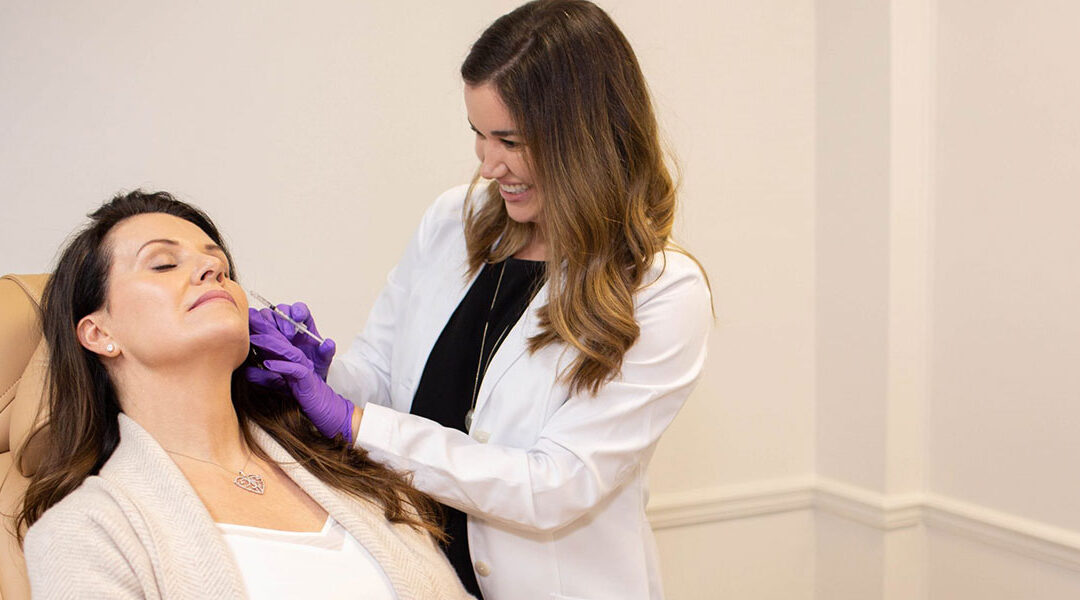
7 Ways to Avoid Bruises from Botox or Dermal Fillers
Bruising is one of the most common concerns patients raise before their first Botox or dermal filler appointment. It is also one of the most misunderstood. The good news is that while bruising can never be entirely eliminated as a possibility, it is far from inevitable. With the right preparation before your appointment and the right care afterward, most patients can significantly reduce their risk and recover quickly, even if light bruising does occur.
Understanding why bruising happens in the first place makes it easier to take the right steps to prevent it.
Why Bruising Happens After Injectables
A bruise forms when a needle nicks a small blood vessel during injection, causing blood to leak into the surrounding soft tissue beneath the skin. The discoloration you see on the surface is that pooled blood showing through. In the context of injectable treatments, bruising most commonly appears around the lips, under the eyes, and in the tear trough area, regions where blood vessels are plentiful, and the skin is particularly thin and delicate.
Several factors influence how likely you are to bruise. Some are outside your control, like the natural density of blood vessels in the treatment area or how your body responds to minor trauma. Others are entirely within your control, and addressing those controllable factors before and after your appointment makes a meaningful difference in your outcome.
1. Stop Taking Blood Thinners in Advance
One of the most impactful things you can do before any injectable treatment is to pause blood-thinning medications and supplements for at least one week prior to your appointment. Blood thinners reduce your blood’s ability to clot efficiently, which means that even a minor nick from a needle is more likely to result in noticeable bruising.
Common over-the-counter medications to avoid include aspirin, ibuprofen, naproxen, and products like Advil, Aleve, Motrin, Excedrin, and similar NSAIDs. Beyond medications, several supplements also have blood-thinning properties that most patients do not realize. Fish oil, vitamin E, flaxseed oil, ginkgo biloba, garlic supplements, and high-dose vitamin C can all affect clotting. If you take any prescription blood thinners for a medical condition, do not stop those without first speaking with your prescribing physician. Your injector can work with you to assess risk and timing.
2. Avoid Alcohol in the Days Before and After
Alcohol causes blood vessels to dilate, which increases blood flow near the surface of the skin and makes bruising more likely when a vessel is disturbed. Even moderate alcohol consumption in the 24 to 48 hours before treatment can have a noticeable effect on bruising outcomes.
The same logic applies after your appointment. Alcohol consumed in the days following treatment keeps blood vessels dilated during the window when any minor tissue trauma from the injections is still healing. Most experienced injectors recommend avoiding alcohol for at least 48 hours before treatment and a minimum of 48 to 72 hours after. Giving yourself that buffer on both ends is a simple and effective way to stack the odds in your favor.

3. Add Pineapple to Your Pre-Treatment Routine
Pineapple contains bromelain, a naturally occurring enzyme with well-documented anti-inflammatory properties. Bromelain has been studied for its ability to reduce swelling, bruising, and tissue trauma associated with minor injuries and medical procedures. Incorporating fresh pineapple into your diet in the two to three days leading up to your appointment is a low-effort, natural way to support your body’s response to the treatment.
Bromelain supplements are also available in capsule form and tend to provide a more concentrated dose than food alone. If you choose to go the supplement route, start taking it three to four days before your appointment. As with any supplement, mention it to your injector during your consultation so they have a full picture of everything you are taking.
4. Do Not Touch or Massage the Treatment Area
In the 24 hours following your injections, it is important to resist the urge to touch, rub, or press on the treated areas. This applies even if you notice slight swelling or tenderness that feels like it might benefit from pressure or massage.
Applying pressure to freshly injected tissue adds mechanical trauma to blood vessels that are already in a delicate state of recovery. This can cause additional vessel disruption and worsen or prolong bruising. For dermal filler patients in particular, touching the treatment area too soon can also displace the product before it has fully settled into position. Keep your hands away from your face, avoid resting your chin or cheeks in your hands, and be gentle when cleansing or applying skincare in the hours following your treatment.
5. Use a Cold Compress Before and After Treatment
Cold causes blood vessels to constrict, reducing blood flow to the area and limiting the extent of any bruising. Applying a cold compress or ice pack wrapped in a clean cloth to the treatment area before your injections and again immediately afterward is one of the most effective physical steps you can take to minimize bruising.
Hold the compress gently against the treated areas for five to ten minutes at a time, repeating every hour or so during the first several hours after your appointment. Be careful not to press with significant force, particularly with dermal fillers, and never apply ice directly to the skin. A thin cloth barrier protects the skin from ice burn while still allowing the cold to do its work.
6. Sleep with Your Head Elevated
The first night after your treatment matters more than most patients realize. When you lie flat, blood and fluid naturally redistribute toward your head and face, which can increase swelling and the likelihood of bruising settling visibly into the skin. Sleeping with your head elevated on two pillows encourages fluid to drain away from the treatment area rather than pooling near the surface.
Try to sleep on your back if possible for at least the first night following treatment. Side sleeping puts direct pressure on the face, which can compress freshly injected areas and contribute to both bruising and product migration in filler patients. The more you can protect the treatment area during those first 12 to 24 hours, the smoother your recovery will be.
7. Take Arnica Before and After Your Appointment
Arnica montana is a plant-based homeopathic remedy that has been used for generations to treat bruising, swelling, and soreness associated with minor trauma. It is widely recommended by injectors as a pre- and post-treatment supplement because it supports the body’s natural healing response and reduces the visibility and duration of bruising when it occurs.
Arnica is available in two primary forms. The oral supplement form, typically taken as small pellets or tablets that dissolve under the tongue, is most effective when started three to four days before your treatment and continued for several days after. The topical gel can be applied directly and gently to the treatment area every 1 to 2 hours during the first 24 hours post-treatment to help accelerate the resolution of any visible bruising. Many patients use both forms together for the most comprehensive effect.
The Role of Your Injector
All seven of these strategies work best when paired with the most important factor of all: the skill of your injector. An experienced, board-certified injector approaches every treatment with a precise, mapped technique designed to minimize trauma to the surrounding tissue. They know which areas carry higher vascular risk, how to adjust needle angle and depth to reduce vessel contact, and when to use a cannula instead of a needle for treatments where bruising risk is elevated.
No amount of preparation fully compensates for poor injection technique, and no technique, however skilled, can guarantee a bruise-free outcome every time. What the right injector does is dramatically lower the probability of bruising through anatomical knowledge, careful product selection, and refined delivery.
At Aesthetic Lane, every treatment begins with a thorough consultation so that your injector understands your full health picture, your medication and supplement history, and your goals before a single injection is made. That preparation, combined with the steps you take on your end, is what leads to the smooth, natural-looking results our patients come to expect.
If you are ready to explore what Botox or dermal fillers can do for you, scheduling a consultation is the right first step. Our team will walk you through exactly how to prepare, what to expect during your treatment, and how to care for yourself afterward so you can enjoy your results with as little disruption to your routine as possible.

Brittany Lane White, a board-certified family nurse practitioner from Lakeland, Florida, holds a nursing degree from Florida State University. With six years of experience in medical and trauma/surgical ICU in Tampa, she pursued a master’s degree in nursing at the University of Tampa. Her passion for aesthetic medicine grew during her master’s training. In Los Angeles, she completed clinical and injection specialist training at a top 25 Allergan account. Brittany focuses on a natural approach to facial aesthetics, emphasizing confidence and refreshment, not an artificial appearance. Beyond work, she enjoys spinning, travel, reading, and beach weekends with her husband, Brian, and two children, Georgina (Georgie) and Westley.
Recent Comments